Scalo Fluviale – 120 years of lagoon freight transport:
Need to establish a working group with institutions to address the changes.
The request for freight transport in Venice: “A working group with institutions to jointly address the epochal changes and technological transformations in a delicate city like Venice.”
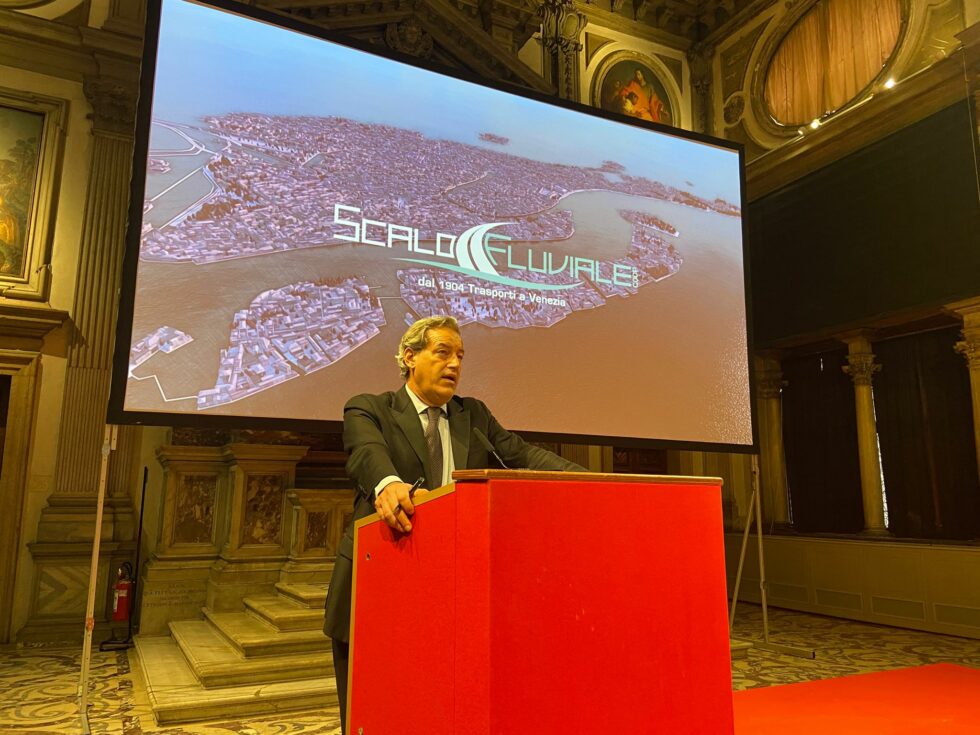
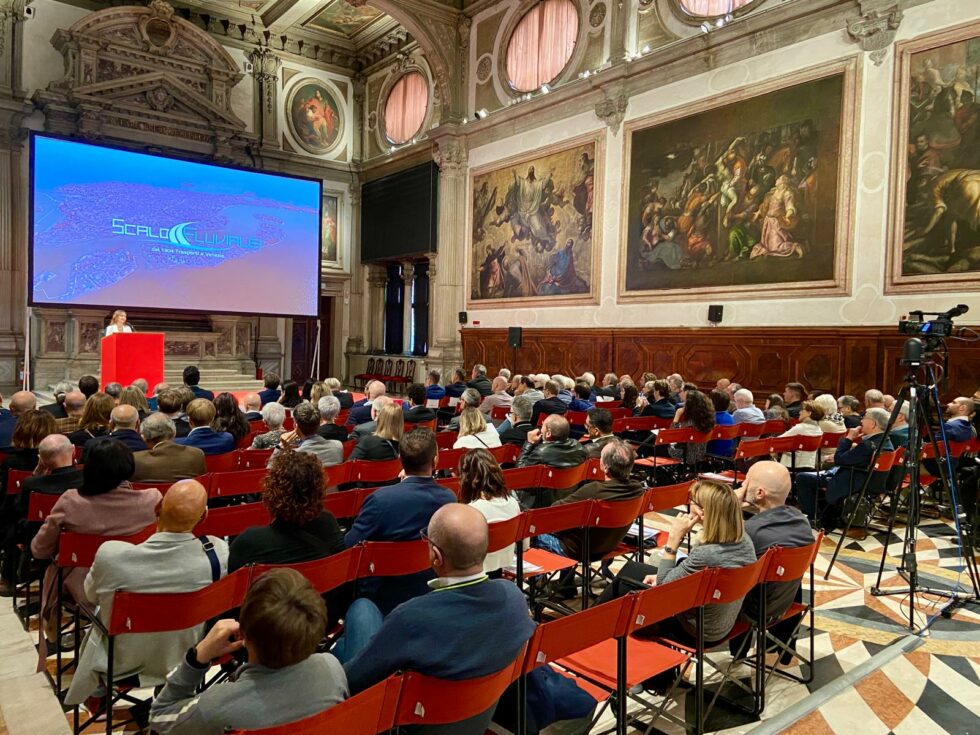
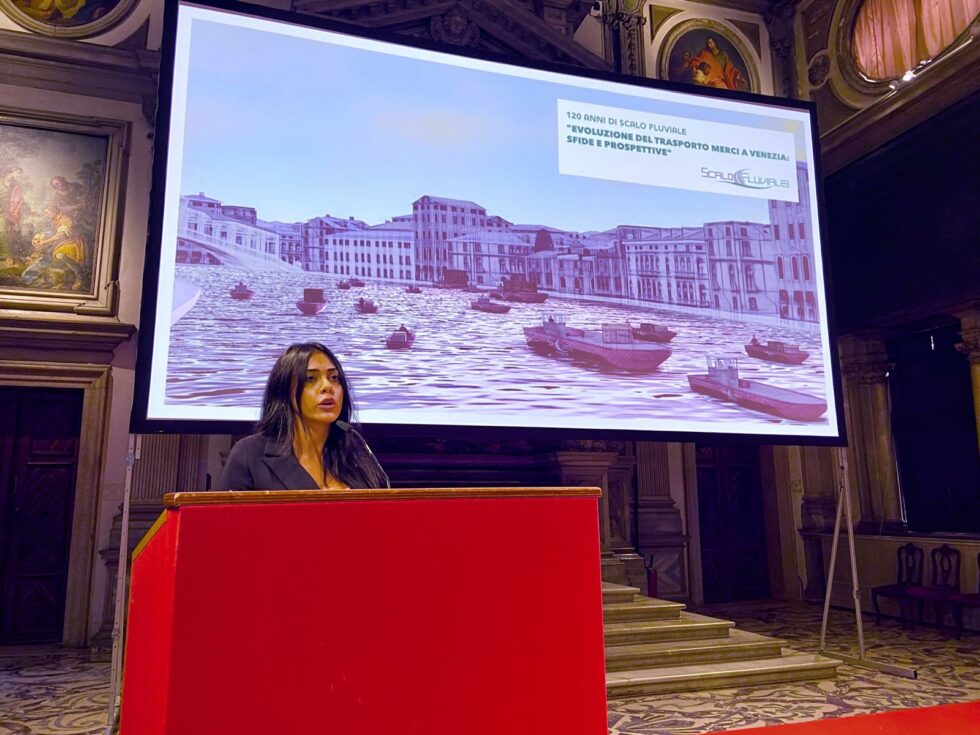
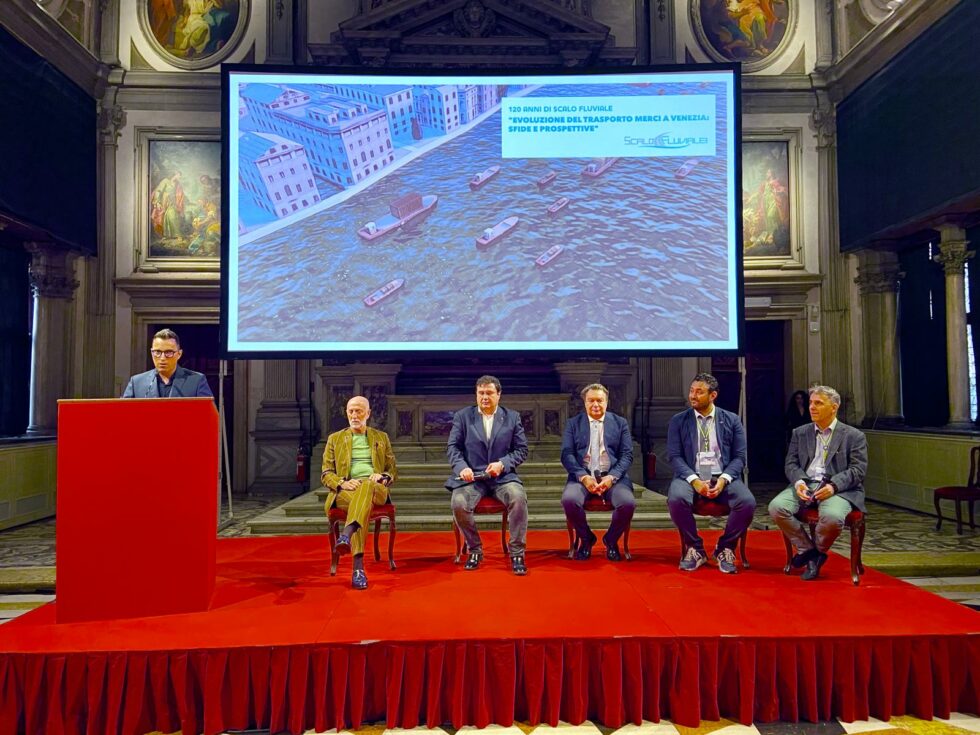
Today, at the Scuola Grande di San Giovanni Evangelista, the 120th anniversary celebration of Scalo Fluviale, the cooperative that has been transporting freight in the historic center since 1904, will be held.
“There has been a dramatic increase in online purchases: for us, it already accounts for 11% of our turnover, and we only started two years ago. We have more and more deliveries to make, and the risk is that, in the near future, we will not be able to guarantee a punctual service.”
Simone Manente — CEO Scalo Fluviale
(Venice, October 26, 2024) – A special anniversary: 120 years of business, combining tradition and innovation. In Venice’s historic center, a unique city on water, there are not only thousands of commuters and tourists who travel every day on public and private water transport, in addition to the residents: there are also goods that, perhaps, travel more quietly and unnoticed, yet constitute a crucial sector—logistics—in the unique context of the lagoon, supporting domestic, commercial, and economic activities.
Today’s meeting, with 200 guests, served to analyze the challenges and prospects, starting with a few key questions: How can we reconcile the transport and movement of goods within the Venice lagoon with the challenges and needs of overtourism? What will be the impact of new technologies on this sector in a uniquely complex city like Venice, starting with automation, digital transformation, and artificial intelligence? How can we make the work of freight transport attractive to younger generations, who are increasingly less attracted to manual labor? What strategies should companies in the sector implement, including investment, in light of the environmental, economic, and social sustainability scenarios for this sector?
Among the authorities speaking were: Regional Councilor for Labor Valeria Mantovan; City Councilor for the Environment Massimiliano De Martin; President of Legacoop National Production and Services Gianmaria Balducci; Secretary of Filt Cgil Venice Marcello Salbitani; and Vice President of Confapi Corrado Secchi.
Last year, Scalo Fluviale began a collaboration with the academic world, involving the economics and engineering departments of the Ca’ Foscari Universities of Venice and Padua. Specifically, a working group of students was established to research and develop a marine propulsion system as an alternative to the traditional systems currently installed on vessels.
“In Venice,” explained Raffaele Pesenti of the University of Venice, “drones cannot currently be used. Will they be useful in the future? How can we use them to transport goods? What transformations do we want to bring about? In the US, Amazon is testing the first automated delivery vehicles. Machines will not replace humans, but they will need to be guided to maximize their potential.”
Transporting goods in Venice in the past meant carrying bags and boxes by hand. Now technology is helping, but the transition is underway, while the ordering system is increasingly leveraging the possibilities of e-commerce.
On the occasion of the 120th anniversary of the foundation, the members wanted to shine a light not so much on their history and past but rather on the future, the scenarios and challenges that will be passed on to the new generations. For the first time, a roundtable discussion was held with relevant local and regional institutions, in the hope that today’s meeting was merely a starting point for a serious discussion on the future of freight transport within the lagoon.
“Venice is changing, and our sector must change too,” explained CEO Manente. “Online purchases have skyrocketed: we started two years ago, and now e-commerce accounts for 11% of our revenue, which gives a good idea of the situation. The risk is that soon we will no longer be able to guarantee a punctual service. We need to work more closely with industry players interested in this type of service to understand how to combine workforce and technology, avoid increasing the pressure, and reach homes and businesses in the best time and under the most convenient conditions for customers.”
Journalist Sebastiano Barisoni, deputy executive director and host of Radio 24, spoke at the event.